
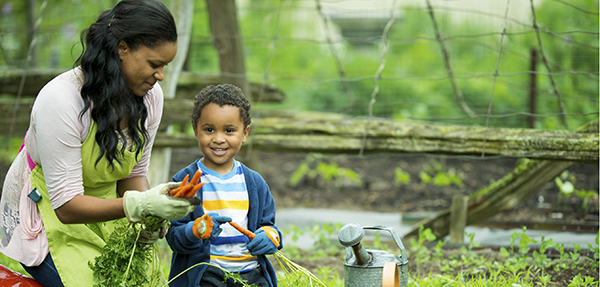
he benefits of outdoor play for children are well documented. Numerous studies show that time in nature impacts every area of child development—physical, psychological, intellectual, social, and emotional. Of course, those who spend even a little time outdoors don’t need studies to tell them about its healing properties, and many parents are eager to impart nature’s joys to their children. But what happens when kids aren’t as enthusiastic about outdoor time as we are? Here are ten ways to gently ease even the most reluctant child into a pleasing relationship with the outdoors.
1. Enjoy Nature With Your Child
Consider nature time family time—something to be enjoyed together, rather than an enrichment activity just for kids. Your kids will follow your lead if they see you enjoying time outdoors. Young children especially want to share activities with the adults in their lives. Time in nature helps build fond memories and the kinds of family bonds that reinforce the behavior.
2. Start Close to Home
There’s no need to wait until you find a perfect trail or take a vacation to a national park. Look for the “nearby nature” close to your home. Young children are adept at finding fascinating nature in small spaces: from the bugs that crawl on garden plants, under logs, or in puddles, to the wildflowers that bloom on the side of the road. Take short walks in your neighborhood if possible. Plant seeds in the ground or in pots. Put out a birdbath or hang a homemade bird feeder and enjoy the nature that comes to you.
3. Start With Short Amounts of Time and Small Amounts of Space
Plan activities that work for your child’s attention span and honor their limits and pace. This is especially true when hiking—choose easy loop walks at first and time them well before or after naptime. Bring plenty of water, snacks, sunscreen, a hat, good shoes, and other comfort items. Let your kids slowly explore, even if that means you don’t cover a lot of ground. The experience outside is key, not the mileage.
4. Do Simple Activities, Perhaps From Your Own Childhood
Young children enjoy learning what their parents did at their age. Jog your memory for the ways you played in nature. Did you make daisy chains, build sand castles, go fishing, or gaze at the stars? You may have played playground games like Duck, Duck, Goose; Mother, May I?; tag; or Kick the Can. If so, it’s time to play again! Here are rules for timeless games to play in a playground, park, or backyard.
5. Turn Walks or Outings Into Scavenger Hunts
Sometimes a scavenger hunt is all it takes to turn a walk, a park outing, or even backyard time into an adventure. Before you go, make a list of 10 things to search for—a pond, a duck, a dandelion, a yellow wildflower, a nest, a feather, or a hollow log. You can create more open-ended items too: something rough, something orange, or a heart-shaped leaf or rock. Older kids can search for items starting with each letter of the alphabet; younger ones can focus on a single letter. Games like these help engage formerly reluctant or bored kids in a whole new way.
6. Look for Small Creatures and Flowers
Nature brings out the observer in people, but it can be coaxed. Bring a magnifying glass or binoculars to get close-up looks at wildflowers, birds, bugs, butterflies, and other creatures.
7. Listen for Birds and Other Nature Sounds
Shutting our eyes often helps us observe more than when we’re walking and taking in multiple senses at once. Try the “Listen, Do You Hear?” game: find a comfortable spot in the grass, lie down, settle in, and have everyone close their eyes. Tell kids to raise one finger for each new sound they hear. At the end, count all the different sounds together.
8. Draw, Journal, and Photograph in Nature
Just as nature brings out the scientist in kids, observing outdoors can foster the artist. Bring journals to write or draw in, or cameras to help focus on and record nature’s beauty. For older kids, try a vertical poem: choose a word that represents your feelings and observations, write it vertically, and use each letter as the first letter of a sentence in the poem.
9. Read About Nature Before You Go
Your child may respond to an invitation to nature in book form. The National Association for the Education of Young Children offers a great list of nature books for kids. Reading and cuddling about nature can build a positive association with the outdoors before you ever step outside.
10. Get the Information You Need
If fears are keeping your family from enjoying the outdoors, empower yourself with knowledge. The American Academy of Pediatrics offers resources for keeping kids safe while playing outdoors.
Enjoy your time outside!
Susan Sachs Lipman (Suz) is the author of Fed Up with Frenzy: Slow Parenting in a Fast-Moving World, which contains 300+ activities for family fun.
Contact the team at the Center for Children and Youth if you need advice about helping a child who is anxious or reluctant to try new things.