
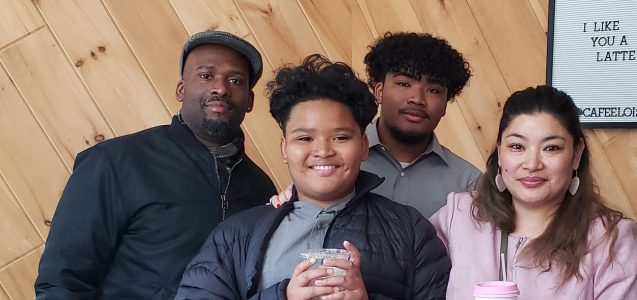
In this special series about Parenting and Race, we highlight the experience of what it’s like to raise kids of color in our society. The intention is to spark courageous conversations, encourage reflection, and provide guidance and support for talking to kids about race and racism at every age, so we can create more inclusive, tolerant, and socially just communities.
A Mother’s Perspective on Raising Black Sons
As a Filipino mother of two African-American boys, I am overwhelmed with difficult and complex emotions about what is happening in our world.
I wonder how much to share with my younger, 13-year-old, son. What information is appropriate for his age? Am I prepared for the questions he might ask? As the news of the protests spread in the wake of George Floyd’s death at the hands of a Minneapolis police officer, I struggled to figure out how I could support him with what he might be seeing or hearing on social media.
I know I have to follow my son’s lead. I know he will be upset and have questions, but I also do not want to overwhelm him with too many details. My son struggles with anxiety and is very sensitive. I know intuitively as his mom that I have to tread gently, but I also know in my heart that I cannot shelter him from reality either.
Preparing Sons of Color for the World Ahead
As an African American male, my son needs to know how he might be perceived and treated in society, and the dangerous situations he may encounter as he becomes an adult. He needs to know about the challenges ahead, and how ongoing struggles for racial equity will impact his future.
As parents, our highest priority is to ensure our children are safe. For my sons, that includes an awareness of the systemic racism that persists in this country. How do I make sure they are equipped with the tools necessary not only to survive, but thrive?
My elder son is now in his early twenties. He is a man coming into his own. I want him to develop his voice, be heard, and be a proactive decision-maker. But as proud as I am of him “adulting,” I’ve also lost countless nights of sleep from the pressure in my chest that increases when he isn’t home by midnight or when he decides to join a protest in the streets.
I hope I have been the type of parent whose advice and guidance has provided a strong foundation for growth and learning. As a mom of African-American boys, I know that I have also had to teach my children how to react when approached by law enforcement—where to put their hands, what to say, what not to say, how to move, and how not to move. Not every parent needs to teach these skills, but for my children it is a necessity.
How to Talk to Kids About Racism: What Helps
As they grow, my sons are becoming increasingly aware of the biases that surround them. The only thing I can do as a mother is to be there for them when life gets complicated and challenging, educate them on the difference they can make in this world, and prepare them for the challenges of a society that wasn’t built with them in mind.
The ongoing protests and movements for racial justice—and the conversations they have sparked—compel me to take a breath every day and remind myself that I am doing what I can to keep my children safe and healthy. I feel a tremendous responsibility to both protect and defend my sons in every way possible, because their lives matter.
If you are navigating how to talk to kids about racism, here are a few principles that have guided me:
- Follow your child’s lead. Let their questions guide the conversation. You don’t need to have all the answers—what matters is that they know you’re available to talk.
- Be honest and age-appropriate. For younger children, focus on fairness and kindness. For older children and teens, you can engage more directly with history and current events.
- Name what’s happening. Avoiding the topic doesn’t protect children—it leaves them without the language or context they need to process what they see and hear.
- Affirm their identity and worth. Make sure your child knows, deeply and regularly, that they are valued—that their life and experience matter.
- Model the conversations you want them to have. Children learn how to engage with difficult topics by watching us engage with them first.
If your child is struggling with anxiety or the weight of what they’re witnessing in the world, it may also be worth exploring how to support children during difficult times and understanding when professional help is the right next step.
Resources for Families
- Ibram X. Kendi, Author, Stamped: Racism, Anti-Racism, and You and The Antiracist Baby
- Systemic Racism explained (short video from Act.TV)
- Ijeoma Oluo, So You Want to Talk About Race
- Austin Channing Brown, I’m Still Here: Black Dignity in a World Made for Whiteness
- Richard Rothstein, The Color of Law
- Dismantling Racism Works
- More books about anti-racism (Time Magazine)
Mary Tiamzon-Lee is a true believer in investing in the people around her, the services she is supporting, and the most efficient processes for everyone. Mary supervises the administrative team for JFCS’ Peninsula region and coordinates programming for the Center for Children and Youth. She received her BA degree from California State University, East Bay in Mass Communications, along with a certificate in Human Resources Management from San Francisco State University. She lives with her husband and two sons in San Francisco.
Talk With Our Team
If you or your family need expert mental health support or guidance on how to talk to kids about racism and social justice topics, our licensed clinicians at the Center for Children and Youth are here to help. We support families navigating difficult conversations, childhood anxiety, and more.
Schedule a free consultation with our team to discuss your family’s specific needs.